The jar full of old pennies, dimes, and quarters is worth more than your
passing glance. For instance,
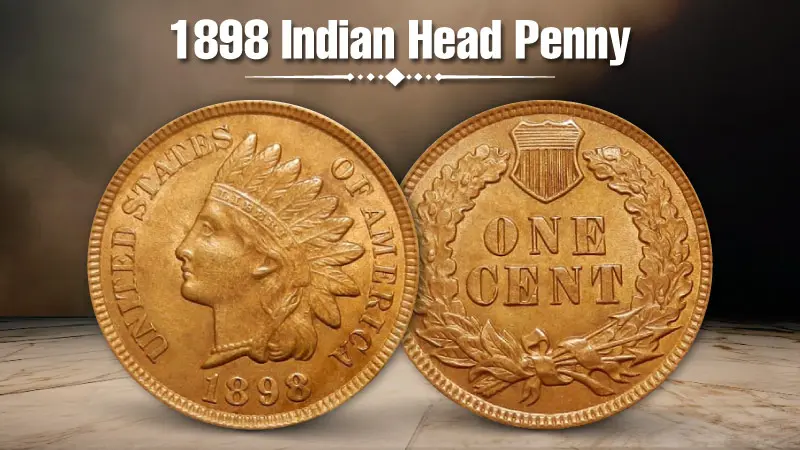
an 1898 Indian Head penny in mint condition can sell for $1,495,
while a coin in average condition will sell for around $3, and a version with
a better rating can be expected to net about $60.
The 1898 Indian Head Penny is a piece of a coinage run from 1859 to 1909. Coin
collectors adore the series, and the coin itself is stunning. Even though they
are relatively common, Indian Head Pennies can have enormous value, much like collectors today seek modern silver coins for their numismatic and investment appeal.
To determine the 1898 Indian Head Penny value, we need to examine different
varieties and grades. This article explains the 1898 Indian Head Penny's
value, grade, and design.
1898 Indian Head Penny Value
The most important factor in determining the value of an old Indian penny is
its condition. Indeed, uncommon mintmarks and dates are valuable, but the
little variations in condition have the potential to increase a coin's value.
An 1898 penny that was still in mint condition is shown. Not a single bit of
the original design has been obscured by wear. This coin is referred to by
collectors as "uncirculated," and specimens in this state are the jewels in
any Indian penny collection.
The grade or general condition of the coin should be the only factor
considered when assigning a value to these coins. Because so many 1898s have
endured, ones in bad shape won't cost you nearly as much as ones in excellent
condition.
When it comes to Indian Head coin prices, these are on the less expensive end
of the spectrum, even in flawless condition. To better understand how much an
1898 Indian Head will cost you if it is given its grade, look at the chart
below.
Grade Your 1898 Indian Penny
Very few of these antique Indian pennies from 1898 are in better than average
condition today. The finer coins double in value or more due to the demand for
higher-quality survivors. Examine your coin in relation to the descriptions to
determine its "grade" and value category.
-
Uncirculated
A coin must have no surface wear in order to be graded "uncirculated"
and at the top of the 1898 Indian head penny value. The ends of her
hair, headband, and feathers above her eyebrow, cheek, and neck are
closely examined.
The cheek and neck areas are the first to exhibit signs of wear at the
highest points of the design. You want the designs to slightly flatten
out to their typical round shape. Angle the coin so that it faces your
eye. Wear is visible in the metal as a different color from the
surrounding non-abraded surface.
-
Extremely Fine
This grade is precisely defined. The tiny bit of wear on the hair just
above the ear requires close inspection. Observe the ribbon trailing
below her headdress and the slight flattening of the cheek beneath her
eye. All in all, a lovely coin with a lovely appearance.
-
The design's highest points—the cheek, neckline, and headband—are
noticeably worn and a little flat. All the major details, however, are
still visible, indicating a finely preserved 1898 Indian penny. Her chin
and cheeks are no longer round.
The majority of the tiny details that divide her hair curls are combined
into one along the back of her neck. Using the headband and feathers
separated, the central portion of the headdress is clearly defined,
lending your coin definition. Overall, the image is still bold but
somewhat worn.
-
Good
An Indian penny in "good" condition has extensive wear that has reduced
the design to just an outline. Normally shielded by the shoulder line,
the base of the neck shows no signs of a beaded necklace. Previously
intricately crafted feathers and headbands are now worn almost
seamlessly.
Even though the design is identifiable as an Indian penny and by its
date, all of the main components have come together. If, on the other
hand, her face appears somewhat rounder, your 1898 Indian head penny is
worth a little bit more.
Design of 1898 Indian Penny
The bust of the Goddess Lady Liberty, which appears on the front face of the
Indian Head penny, gave rise to its name. She honors the indigenous people of
America and the independence of this new nation by donning an Indian Chief
headdress and having flowing hair.
The coin's reverse side has an oak wreath with a shield at the center. The
words "One Cent" are surrounded by a wreath. The coin is smooth on the
outside, but on both sides, there is a ring of tiny diamonds around the edge.
Without any significant redesigns since its introduction in 1859, this
timeless design has been in use.
Conclusion
The 1898 Indian Head Penny is more than just an old coin; it's a piece of
history that can be quite valuable. Whether you're a seasoned collector or a
curious beginner interested in historical coins or modern silver bullion, understanding the condition and rarity of these pennies
can help you appreciate their worth.
From pennies in "good" condition to those in "uncirculated" state, each coin
tells a story and holds a unique place in numismatic collections. So next
time you come across an old penny, take a closer look—you might just have a
hidden treasure in your hands.